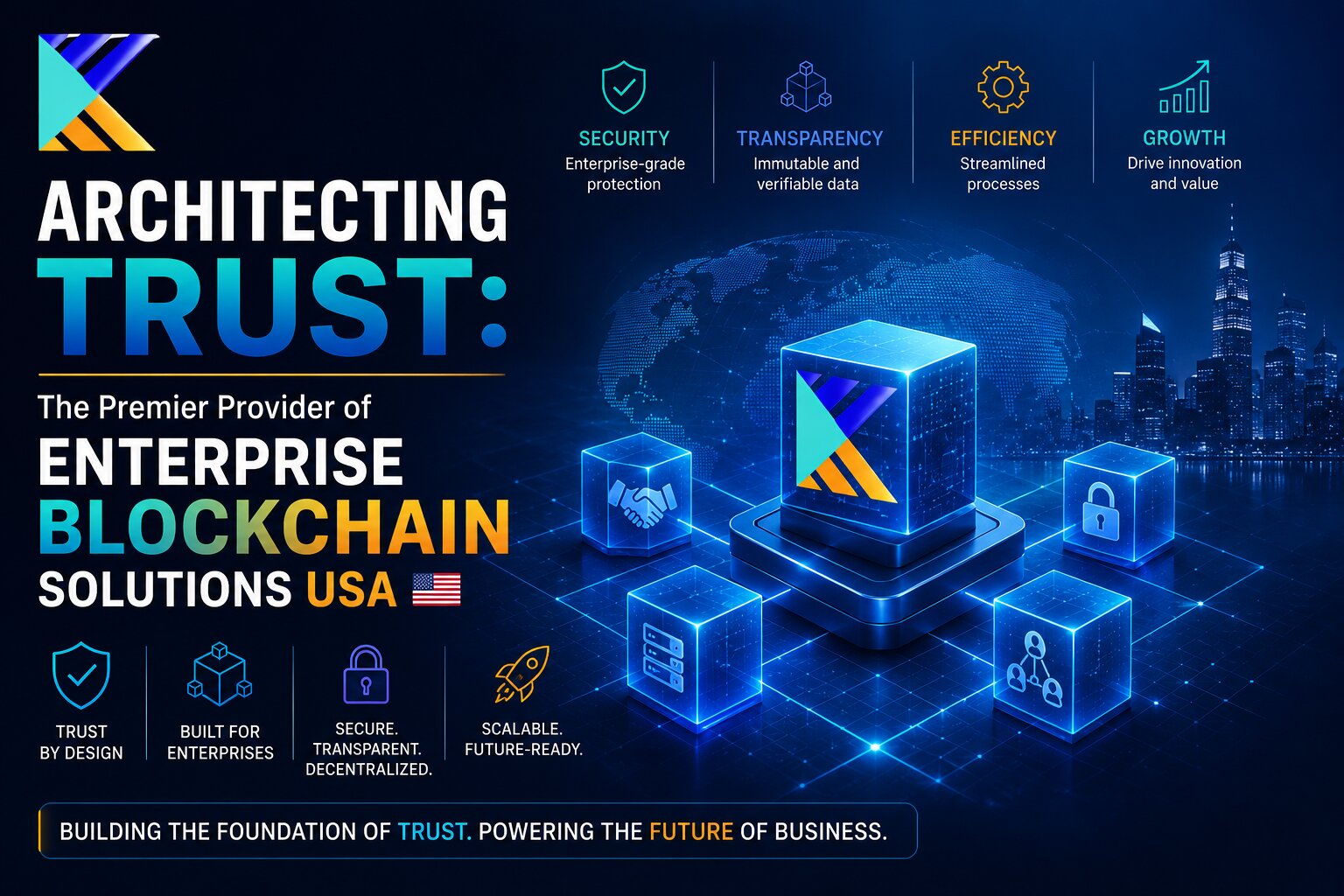
In the rapidly evolving technological landscape of 2026, American corporations are facing a critical inflection point. As global supply chains become increasingly complex, cyber threats grow more sophisticated, and regulatory compliance demands tighter data control, legacy software systems are buckling under the pressure. The traditional model of centralized data silos—where multiple organizations maintain their own isolated, often conflicting databases—is no longer just inefficient; it is a massive operational liability.
To achieve absolute data integrity, automate multi-party workflows, and secure digital assets, industry leaders are aggressively pivoting toward Distributed Ledger Technology (DLT). However, implementing blockchain at the enterprise level is vastly different from launching a consumer crypto token. It requires rigorous cybersecurity standards, flawless integration with existing legacy systems, and strict adherence to American regulatory frameworks. You need the technical firepower of a specialized engineering firm that deeply understands enterprise blockchain solutions in the USA.
At Kyptronix LLP, a high-end tech, web design, and app development agency operating across major corporate hubs like Chicago, Vancouver, Calgary, and throughout the US, we do not chase technological fads. We build resilient, enterprise-grade architectures. We architect robust blockchain networks designed to eliminate operational friction, eradicate data tampering, and drive measurable financial efficiency for large-scale organizations.
The 2026 Paradigm Shift: Moving Beyond the Crypto Hype
For years, the concept of blockchain was inextricably linked to the volatile cryptocurrency markets. Today, that narrative has completely shifted. Fortune 500 companies, financial institutions, and massive healthcare networks recognize blockchain for what it truly is: an impregnable, decentralized infrastructure capable of validating truth without the need for a centralized intermediary.
The Power of the Immutable Ledger
In a standard corporate database, a system administrator (or a malicious hacker who compromises their credentials) can alter, delete, or manipulate historical records. This creates a single point of failure and a massive vulnerability for financial fraud or data breaches.
Enterprise blockchain fundamentally solves this issue. Every transaction, data exchange, or digital event is cryptographically sealed into a "block" and chained to the previous one across a distributed network of nodes. Once data is verified and written to the ledger, it becomes entirely immutable. It cannot be silently altered or deleted. For US enterprises dealing with stringent auditing requirements—such as Sarbanes-Oxley (SOX) or the Health Insurance Portability and Accountability Act (HIPAA)—this mathematically guaranteed audit trail is revolutionary.
Public vs. Private Permissioned Networks
A critical distinction in enterprise architecture is the transition away from public, permissionless blockchains (like the main Ethereum network) toward private, permissioned networks (like Hyperledger Fabric or Enterprise Corda). Public networks are open to anyone, which is a non-starter for corporations handling proprietary intellectual property or sensitive consumer data.
As a premier provider of enterprise blockchain solutions in the USA, we engineer highly secure, permissioned consortium networks. In these environments, only cryptographically verified and authorized corporate entities are allowed to participate in the consensus process or view specific data subsets. This ensures absolute privacy, dramatically higher transaction throughput, and compliance with US data sovereignty laws.
Core Applications Transforming the American Enterprise
The theoretical promises of distributed ledger technology have now translated into tangible, high-ROI corporate applications. We deploy blockchain architectures that solve highly specific, deeply entrenched operational bottlenecks.
Automated Workflows via Smart Contracts
A smart contract is a piece of self-executing code residing on the blockchain that automatically enforces the terms of an agreement when predefined conditions are met. In traditional corporate operations, executing a multi-party agreement requires layers of intermediaries, manual verification, escrow agents, and days of processing time.
We engineer complex smart contracts that automate these processes instantly. For example, in a logistics network, a smart contract can be programmed to automatically release a multi-million-dollar payment the exact second a connected IoT (Internet of Things) sensor verifies that a shipping container has arrived at a US port at the correct internal temperature. This eliminates invoice disputes, cuts out intermediary fees, and accelerates capital velocity.
Unprecedented Supply Chain Provenance
Modern supply chains are opaque. When a product defect or a food-borne illness occurs, tracing the origin through dozens of global suppliers takes weeks, often resulting in massive, costly recalls.
By integrating blockchain technology, every single component or ingredient is tracked on an immutable ledger from the moment of origin to the final consumer. If an issue arises, an enterprise can trace the exact origin of a compromised batch within seconds, allowing for a surgical, highly isolated recall rather than a brand-damaging global panic.
Secure Identity Management and Zero-Trust Data Sharing
Data breaches cost US enterprises billions of dollars annually. The traditional method of storing millions of customer identities in a centralized server is highly vulnerable. We architect decentralized identity (DID) solutions where users maintain control of their own cryptographic keys, and the enterprise simply verifies the cryptographic proof without storing the actual underlying data in a honeypot database. This zero-trust architecture fundamentally neutralizes the threat of mass data exfiltration.
The Engineering Challenge: Integration and Scalability
The most significant hurdle preventing companies from adopting blockchain is the complexity of integration. You cannot simply discard your existing Enterprise Resource Planning (ERP) systems like SAP, Oracle, or Salesforce.
Seamless API Bridging and Legacy Integration
A standalone blockchain is useless if it cannot communicate with the rest of your corporate infrastructure. As full-stack software engineers, we specialize in building highly secure, bi-directional API bridges. We ensure that your newly deployed distributed ledger communicates flawlessly with your legacy databases, updating records in real-time without causing operational disruptions.
Proven Enterprise Excellence
Deploying an enterprise blockchain requires an engineering partner with a deep understanding of cryptography, cloud infrastructure, and enterprise software architecture. It requires a firm that has successfully executed massive digital transformations under extreme pressure. We invite you to explore our comprehensive portfolio to view the caliber of custom software, advanced app development, and secure enterprise solutions we have successfully delivered for demanding corporate clients across North America.
Future-Proof Your Organization Today
The adoption of distributed ledger technology in the corporate sector is accelerating rapidly. Companies that integrate these trustless, automated frameworks are currently slashing their operational costs, drastically reducing their exposure to fraud, and establishing a massive competitive advantage over their slower-moving rivals. In the next few years, operating without a verifiable, immutable data infrastructure will be as archaic as operating without the internet.
Do not allow your enterprise to fall behind the technological curve. You need a strategic engineering partner who understands the intricate complexities of consensus algorithms, smart contract security auditing, and American regulatory compliance.
Take the decisive step toward operational invulnerability. Reach out to our technical directors today to schedule a high-level strategic discovery session. Visit our contact us page to initiate the conversation. Let us audit your current operational bottlenecks and demonstrate exactly how the leading architects of enterprise blockchain solutions in the USA can transform your corporate infrastructure into a highly secure, mathematically precise revenue engine.
Frequently Asked Questions (FAQs)
What are enterprise blockchain solutions?
Enterprise blockchain solutions are customized, highly secure distributed ledger technologies designed specifically for corporate use. Unlike public cryptocurrencies, they focus on data privacy, high transaction speeds, and strict regulatory compliance to solve complex business operations like supply chain tracking and secure data sharing.
How does a private blockchain differ from a public one like Bitcoin?
A public blockchain allows anyone to join the network, read the ledger, and participate in verifying transactions. A private (or permissioned) enterprise blockchain restricts access only to authorized corporate entities, ensuring that sensitive business data remains entirely confidential.
What is a smart contract, and how does it save money?
A smart contract is self-executing code stored on the blockchain that automatically triggers an action (like releasing a payment) when specific conditions are met. It saves money by completely eliminating the need for expensive third-party intermediaries, lawyers, or escrow agents.
Will a blockchain integration replace my current ERP system (like SAP or Oracle)?
No. An enterprise blockchain is designed to act as an underlying layer of trust and automation. We build secure API bridges that connect the blockchain directly to your existing ERP, CRM, and legacy databases to enhance their capabilities without forcing you to abandon them.
How does blockchain improve supply chain management?
It creates an immutable, transparent record of a product's entire journey. Every time a product changes hands, a permanent record is created. This allows enterprises to instantly trace the origin of a product, verify its authenticity, and execute highly targeted recalls if necessary.
Is enterprise blockchain compliant with US data privacy regulations?
Yes, when architected correctly. By utilizing permissioned networks, zero-knowledge proofs, and off-chain data storage for personally identifiable information (PII), we ensure that your blockchain solution complies fully with US regulations like HIPAA and SOC2.
What is the environmental impact of enterprise blockchain?
Unlike the energy-intensive "Proof of Work" mining used by older public networks, enterprise blockchains utilize highly efficient consensus mechanisms (like Raft or PBFT). These require a fraction of the computational power, resulting in a virtually non-existent carbon footprint.
Who controls the data on an enterprise blockchain?
In a consortium blockchain model, the data is controlled collectively by the authorized member organizations. No single entity has the power to alter or delete historical records without the cryptographic consensus of the network, ensuring absolute mutual trust.
How long does it take to develop and deploy a custom enterprise blockchain?
Timelines vary heavily based on the complexity of the workflow and the required integrations. A Proof of Concept (PoC) can typically be developed in 8 to 12 weeks, while a full-scale, production-ready enterprise deployment may take 6 to 9 months of rigorous engineering and security auditing.
How do we start a blockchain initiative with Kyptronix LLP?
The process begins with a strategic technical consultation. Simply visit our contact us page to reach our team. Our enterprise architects will review your operational bottlenecks and design a tailored roadmap for your DLT integration.