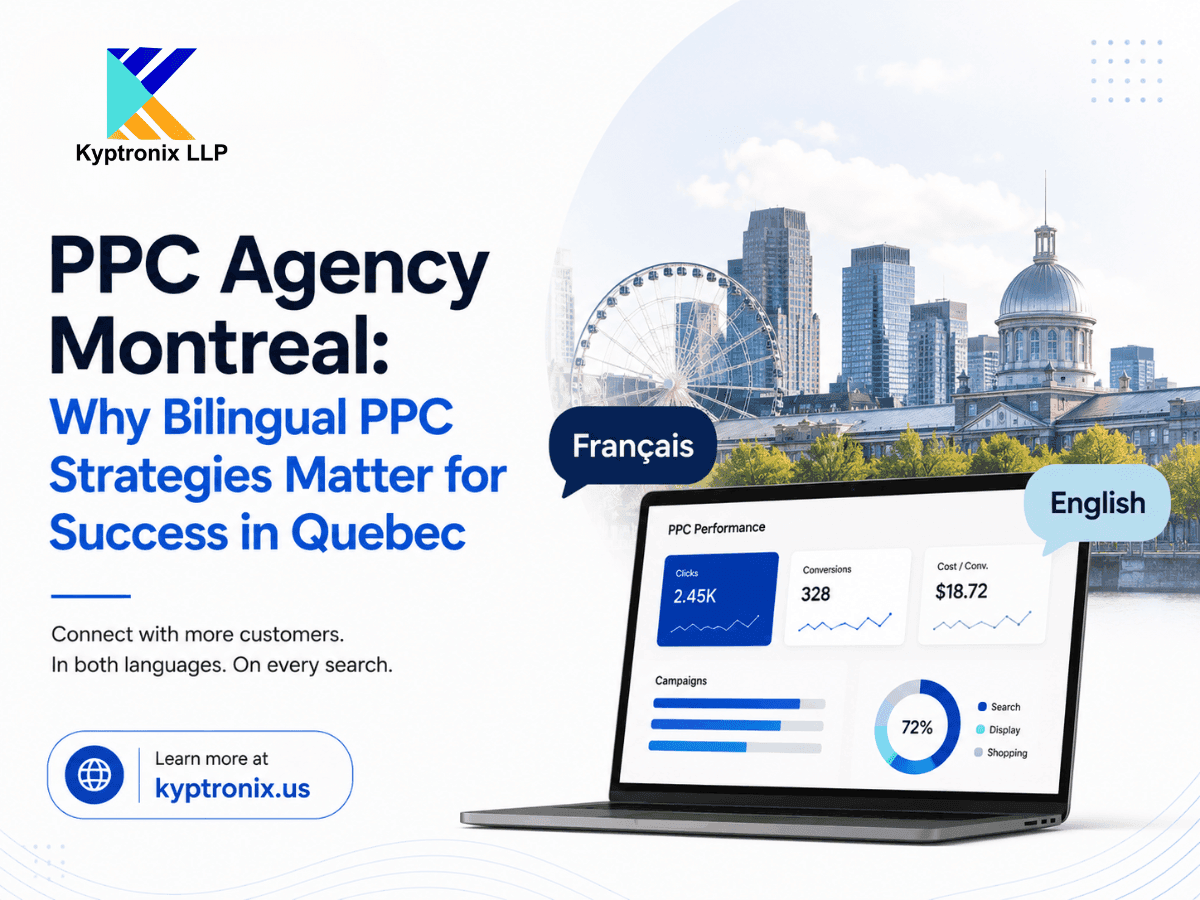
Quebec doesn't play by the same rulebook as the rest of North America. Part of that's legal. Most of it is just how people search here. Montreal runs on two languages at once, and if your campaign only speaks one of them, you're already losing ground before launch.
A lot of American companies treat French as a find-and-replace job. Swap the words, keep the structure, ship it. Doesn't work that way. What actually gets results is copy built separately for each language, keyword research that doesn't skip steps, and someone who actually understands how people in this city search, not how a translation tool guesses they might. If you're talking to agencies, ask how they handle bilingual work specifically. A PPC Agency Montreal that can't answer that clearly probably isn't the right fit.
Why This City Needs a Different Playbook
Not many Canadian cities blend two languages the way Montreal does. Put the same product in front of an English speaker and a French speaker, and you'll often get two completely different search behaviors out of it.
A few things worth flagging: search intent doesn't stay consistent across languages, even for identical products. Cost-per-click moves depending on which language you're bidding in. A headline that performs in English can just... die in French. And Quebec's language laws aren't optional guidelines; they actually shape what your ads are allowed to say.
Running your campaign through Google Translate and calling it bilingual isn't really solving the problem. The agencies worth paying build separate strategies for each audience, based on real search behavior instead of assumptions.
How People Actually Search Here
Nobody searches in literal translations. Type "Montreal PPC services" in English, and the French equivalent isn't a word-for-word match; someone might search "services informatiques Montréal" instead. Similar intent, sure, but different volume, different competition, different expectations once they click through.
That gap is the whole argument for doing bilingual keyword research properly: separate keyword lists, separate ad groups, separate landing pages, separate conversion tracking. Built from scratch for each language. Not translated from one into the other.
Translating a Word Isn't the Same as Reaching Someone
Translate a headline literally, and something almost always gets lost, usually the exact thing that made it work in the first place. A more useful question than "what's the French version of this" is "how would someone here actually phrase it?"
Copy written natively for the local audience tends to just perform better. It picks up on regional phrasing, cultural context, and buying habits that don't always translate, and it reads like it was written for the reader, not converted for them. Goes for Search, Display, YouTube, Performance Max, Microsoft Ads — all of it.
Split the Campaigns by Language
One thing we see constantly: English and French crammed into a single campaign. Most people who've actually run Quebec accounts long enough know to split them.
English side gets its own keywords, its own copy, its own landing pages. Same for French: separate keywords, separate copy, separate pages.
Why bother? Cleaner Quality Scores. Keyword relevance that actually holds up. Budgets that are easier to manage without one language quietly draining the other. And reporting that tells you which side is actually pulling its weight, instead of a blended number that hides which language is working.
The Landing Page Carries Half the Weight
Getting the click is only half the job. Send someone who clicked a French ad to an English landing page, and don't be surprised when conversions take a hit. A PPC Agency Montreal that knows what it's doing lines up the search term, the ad, the landing page, and the call-to-action, all in the same language, all the way through. That's what turns a click into an actual lead instead of a bounce.
What We've Picked Up Running These Accounts
Managed enough multilingual PPC accounts at this point to notice a pattern: staying consistent on language, start to finish, matters more than most clients expect going in. It varies by industry, sure, but campaigns built separately for each language — ads, keywords, pages, the whole setup — tend to beat ones that were translated together afterward.
Ran a side-by-side comparison once. One version: translated ads pointing at English pages. The other: fully localized ads with pages built to match, in each language. The localized version pulled stronger engagement and was genuinely easier to optimize, mostly because we could actually separate performance by language instead of averaging everything into one number.
Not saying every business sees the exact same result; competition, offer quality, and landing page strength all factor in. But the pattern's consistent enough to trust: build for the language. Don't just translate into it.
Where Montreal Campaigns Tend to Break Down
Word-for-word keyword translation is a common one; a lot of those terms barely get searched, or worse, carry a different intent entirely.
Skipping Quebec's language rules is another. Depending on the industry, there are real provincial requirements around what marketing materials need to include.
Then there's running both languages off a single budget. English usually eats most of it, leaving French without enough data to actually optimize. Splitting the budgets fixes that pretty quickly.
And landing pages run through translation plugins tend to read a little stiff. Copy written natively in each language just holds up better.
What a Good PPC Agency Montreal Actually Looks Like
Bilingual PPC isn't every agency's strong suit. Look for real keyword research done separately in English and French, not a translated spreadsheet with a new header. Segmentation by language, location, and intent. Conversion tracking tied to actual outcomes, leads, calls, sales, not just click counts. Ongoing work on search terms, negative keywords, bids, copy, landing pages. And reporting that actually explains what's happening with spend, cost per conversion, ROAS, and the trend over time.
If someone guarantees rankings or revenue upfront, that's a red flag. Too many variables sit outside any agency's control for that promise to mean much.
Why Professional Management Is Worth It
Turning on a Google Ads campaign and walking away isn't really management. Good PPC work trims wasted spend, sharpens targeting, tests messaging with actual discipline instead of guesswork, keeps landing pages aligned with whatever's driving the traffic, and bases every change on real performance data, not gut feeling.
Conclusion
Winning in Quebec takes more than swapping words from one language to another. A real bilingual PPC strategy accounts for language preference, local search habits, proper campaign structure, and landing pages that actually match what people typed in. Whether you're a US business testing the Montreal market or a local team trying to grow inside Quebec, working with a PPC Agency Montreal that actually knows the territory helps build campaigns that fit, backed by ongoing optimization and numbers you can trust.
Skip the generic playbook. Data, localization, and steady refinement get you there instead.
Ready to reach customers in Montreal with smarter PPC?
Whether this is your first bilingual campaign or one you're already refining, Kyptronix US can help build localized, data-backed PPC campaigns made specifically for Quebec. Reach out, and let's talk through how a tailored approach could benefit your advertising.
FAQs
1. Why hire a PPC Agency Montreal instead of managing it myself?
An agency with real bilingual experience handles the keyword research, campaign structure, and ongoing tuning — which tends to lead to better decisions. It still depends on your budget, competition, and site quality, though.
2. Doesn't Google just translate ads automatically?
It has translation tools, but they're no substitute for copy actually written with local intent in mind.
3. Am I legally required to advertise in French in Quebec?
Depends on your business and what materials are involved. Worth checking Quebec's current guidance before launching anything.
4. Should English and French run as separate campaigns?
In most cases, yes. Budgeting, tracking, and messaging all get simpler once they're split.
5. Does the landing page language actually matter?
It does. Matching it to the ad and search query usually smooths out the experience and helps conversions.
6. Which platforms does a PPC Agency Montreal typically handle?
Depending on the goals — Google Ads, Microsoft Ads, YouTube, Display, Performance Max, remarketing, sometimes all of it.
7. How long until a PPC campaign is fully optimized?
Never really "done," honestly. Early data shows up within weeks, but the real gains come from testing over time.
8. How do you actually measure whether PPC is working?
Click-through rate, conversion rate, cost per conversion, ROAS, and how those tie back to what the business actually needs.
9. Can a US company run PPC targeting Montreal?
Yes, easily; location targeting and localized campaigns make that doable from anywhere.
10. What separates a good PPC Agency Montreal from an average one?
Solid PPC fundamentals plus real bilingual expertise, clear reporting, constant optimization, and attention to local compliance.